Friday, March 13, 2015

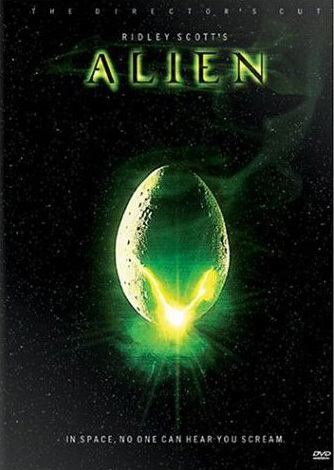
My Take on "Alien" directed by Ridley Scott


A moment’s preamble:  In June of 2014 I began graduate school at Seton Hill seeking an MFA in Writing Popular Fiction. This term I’m enrolled in a course that focuses on MONSTERS, and as a part of that course I’ll blog on each book/story/movie covered.

I'll break each review down into 4 parts: Strength of Character, Genre potency, Poignancy of themes, and Entertainment Value. For each of these I will assign a letter grade. My reviews will contain **SPOILERS**

“Alien (1979):
A highly aggressive extraterrestrial creature that stalks and kills the crew of a spaceship.” –Wikipedia
 
Strength of Character: A+

How can I give this film less than an exceptional rating? This is the introduction of Ellen Ripley, one of the best characters in modern science fiction. She is smart, courageous, empathetic, and above all, oozing with agency. Agency is a word us writers like to throw around about a character’s ability to drive the plot through action, as opposed to bouncing along in the wake of the SS Plotship.

I would be remiss not to mention the fact that she was a female protagonist at a time where that was extremely rare for science fiction. I don’t mention this last because I find it less important. Socially, I believe it represents a milestone. This character blazed a trail through acid-bleeding xenomorphs and sexist thoughts alike (are they so different?). But don’t I don’t want to lose perspective here, Ripley works as a character first, and even in a perfect world where sexism no longer exists, this character would still be every bit as memorable.

The crew of the Nostromo is lively and intriguing as well. They are real people (well, except for the android), and represent normalcy and familiarity amidst a setting that is so, well, alien. They want to go home, hate the bureaucracy of “the Company” and gripe about pay. We all can identify.
Oh, you poor souls.

Genre Strength: A+

This movie was a trend-setter for both science fiction and horror. Watching it now, from the perspective of a desensitized 2015 horror movie fan, much of the elements in Alien seem predictable. The false ending is a prime example. Today’s viewer sees it coming because it has been done to death so much it should wrapped in white linen and jettisoned into space. But “Alien” is itself one of the prime reasons this type of ending is so popular. I refuse to look at this film through the lens of all the imitators and see it as somehow derivative.

The film’s pacing is superb, using atmosphere and subtlety to intrigue the audience. The open, cold vastness of space is a cosmic horror in its own right. Silence is the soundtrack for much of the film, letting our own fears echo in our ears instead of a score. “Alien” piques our curiosity. Then curiosity eats the cat with that mini extendo-mouth.

This movie is more Horror than sci-fi, and although the sequels lean further away from the original's horror, the franchise still represents a link between the two genres that is indelible. It essentially created an entire sub-genre of film and video games.

Thematic Poignancy: A+

So much has already been written about this film’s themes I won’t even pretend to give an exhaustive analysis of them here. But upon watching this movie for approximately the 82nd time this was what I picked up on:

The artwork that started everything.
There is the obvious parasitism. The male-rape was genius at the time, a way to take the horror conventions that had been victimizing women for so long and turning the tables on the male viewers in an unexpected way. Fear of pregnancy for both sexes, especially rape-induced, furthers takes that horror to another level. Thrown in for good measure, we get the soullessness emotionlessness of machines, the fear of artificial intelligence, and the destructive boot heel of bureaucratic greed.

The art design of H.R. Giger uses the set and creature designs to visually reinforce the themes and motifs.

Entertainment Value: A-

This movie was a low budget borderline B-movie at the time it was made. This forced direction Ridley Scott into using scale models, practical effects, and physical sets. The result helps make this movie relatively timeless. We are seeing a return to this sort of production today as filmmakers begin to realize that an over-reliance on graphics actually dates a move in a way that a practical, physical effect never will. This works well for the most part, but the low budget could not be completely disguised in a few scenes. The unconvincing android head of the science officer is chief among them.

“Alien” is a hugely entertaining and memorable film. Voted onto many “Top Movie” lists. What else is there to say?

Random Notes and Final Grade: A+

*The alien does look pretty fat and slow moving in light of the later movies, but I can’t fault this film for it. This is the origin.

*This anecdote is one of my absolute favorites about this film: “For the filming of the chestburster scene the cast members knew that the creature would be bursting out of Hurt, and had seen the chestburster puppet, but they had not been told that fake blood would also be bursting out in every direction from high-pressure pumps and squibs. The scene was shot in one take using an artificial torso filled with blood and viscera, with Hurt's head and arms coming up from underneath the table. The chestburster was shoved up through the torso by a puppeteer who held it on a stick. When the creature burst through the chest a stream of blood shot directly at Veronica Cartwright, shocking her enough that she fell over and went into hysterics. According to Tom Skerritt: "What you saw on camera was the real response. She had no idea what the hell happened. All of a sudden this thing just came up.” –Wikipedia

* Crew expendable.

Thursday, March 5, 2015

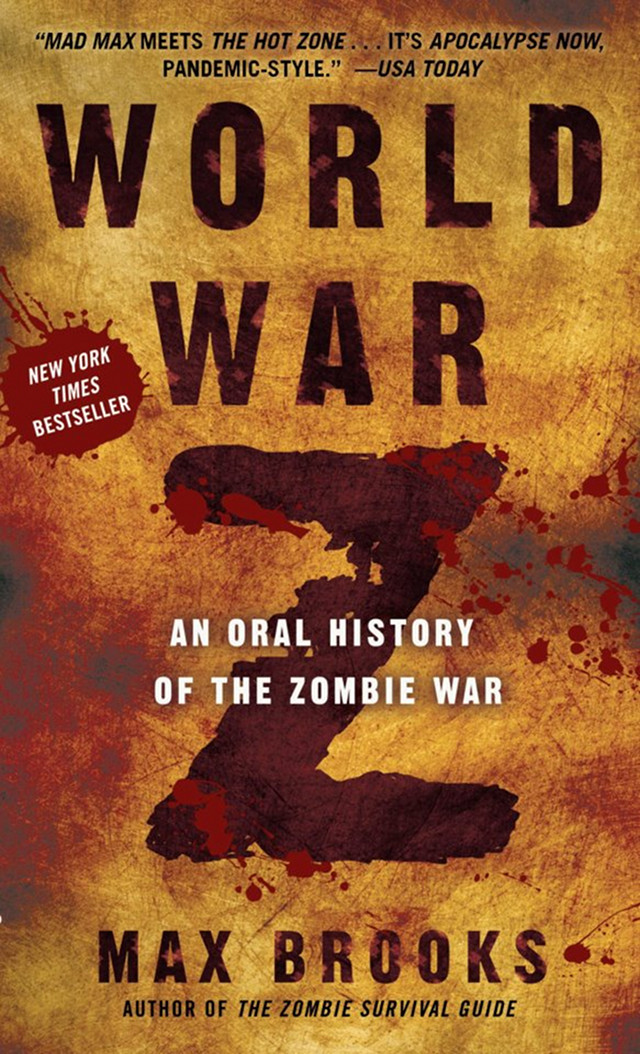
My take on "World War Z" by Max Brooks


A moment’s preamble:  In June of 2014 I began graduate school at Seton Hill seeking an MFA in Writing Popular Fiction. This term I’m enrolled in a course that focuses on MONSTERS, and as a part of that course I’ll blog on each book/story/movie covered.

I'll break each review down into 4 parts: Strength of Character, Genre potency, Poignancy of themes, and Entertainment Value. For each of these I will assign a letter grade. My reviews will contain **SPOILERS** 

“(World War Z) is a collection of individual accounts narrated by an agent of the United Nations Postwar Commission, following the devastating global conflict against the zombie plague. Other passages record a decade-long desperate struggle, as experienced by people of various nationalities. The personal accounts also describe the resulting social, political, religious, and environmental changes.” –Wikipedia
 
Strength of Character: B-

This was a very tricky novel for me to rate for character. The book has a global scale and scope that take center stage away from the individual, although many of the sections do delve into more personal struggles.

The story of World War Z does not closely follow any central characters in anything resembling the usual three act story structure. Nor does it do more than hint at character arcs and change, and character arcs it does address, like Todd Wainio’s, occur mostly off-the-page. We are presented with a man who was changed by his experiences, but we don’t walk in-step with him along the path to those changes.

The characters do, however, provide the vehicle for the story, and it is through their myriad voices that we hear the tale of World War Z.  

Genre Strength: A-

Although some understandable zombie-fatigue may be going around out there, I found Max Brooks’ oral history style to be a refreshing twist. It is difficult to find zombies particularly frightening these days, but what is genuinely horrifying are the ways that humans react. People turn on one another, governments fail their citizens, betray them, even sacrifice them, panic creates disasters that could’ve otherwise been avoided, cowardice and greed run rampant. These events feel so real in World War Z that you could’ve sworn you saw them on the news last night. That is a great storytelling, and it adds up to an engaging horror novel.

Thematic Poignancy: A

This was a book brimming with powerful themes. It begins with the frailty of man, the stubbornness, the greed, the cowardice. We see glimmers of courage, but in the face of hopeless odds the sense of helplessness dominates. What can be done to fight despair? To persist in a world gone to hell?

Max Brooks asks those questions, and then slowly answers them. We see the world come back from the brink. Hope returns, however fleeting, and humanity adapts. In the end, there was a tone of quiet, bittersweet triumph.

Entertainment Value: B+

All that stuff that you keep wondering about on AMC’s “The Walking Dead,” like what the hell is happening everywhere else? Are there zombies in the ocean? In the snow? What about in the desert? China? If you can’t stand not knowing potential answers to these types of questions, I highly recommend this book. The only caveat I make is that Max Brook’s outlook on humanity starts of as bleak as any, but by the end, is a relative success story. The world of The Walking Dead has never felt that way to me.

Overall, after I got over some initial misgivings about the lack of a central character, I found this novel extremely entertaining. I am a sucker for great character arcs, though, and at times the novel wanted for them.

Random Notes and Final Grade: B+

*For my money, this novel far outshines the 2013 Film it inspired. Don’t think you know the story of “World War Z” just because you saw the movie. The book is nearly unrecognizable in relation, other than by the existence of zombies and one or two scenes that bear a slight resemblance.
 
*Military bravado turned into outright disaster. Troops under supplied, and an enemy underestimated. The Yonkers section was a delight to read, and may be the one section that stays with me the longest.

*The “Redeker plan” for leaving behind large sections of the populace as bait for the zombies is the sort of cold, horrific thinking that I find so damn compelling in the zombie apocalypse. His plan isn’t just unethical, that’s way too mild a term. It is horrific. Yet it saves lives. Millions. The cherry on top of this zombie-brain pie is of course the shattered psyche of the man who invented it, now unable to reconcile his reality with his guilt.

*The inclusion of, and attention to, ocean-walking zombies was something I had never seen done. It was a nice surprise that paid dividends throughout the book in some of my favorite sections, from the disaster at the beach, to the Chinese submarine, and even to the zombie-killing deep sea divers.

Friday, February 27, 2015

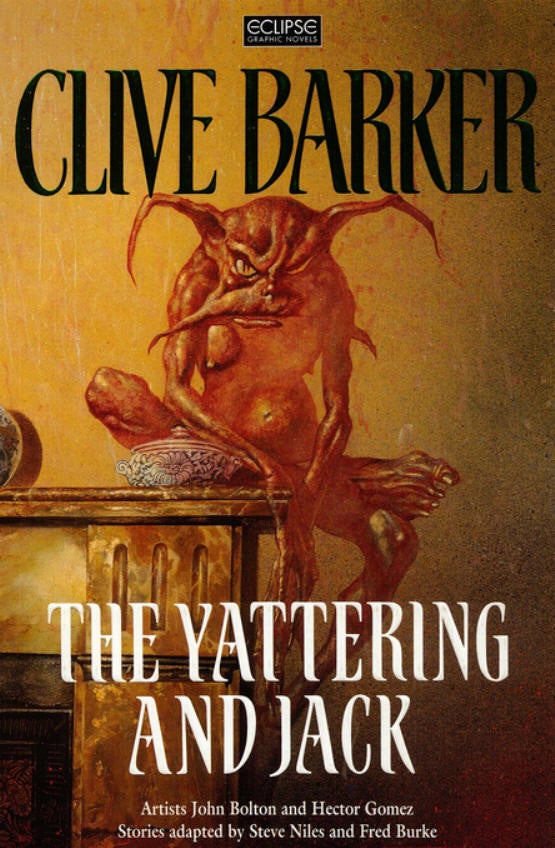
My take on "The Yattering and Jack" by Clive Barker


A moment’s preamble:  In June of 2014 I began graduate school at Seton Hill seeking an MFA in Writing Popular Fiction. This term I’m enrolled in a course that focuses on MONSTERS, and as a part of that course I’ll blog on each book/story/movie covered.

I'll break each review down into 4 parts: Strength of Character, Genre potency, Poignancy of themes, and Entertainment Value. For each of these I will assign a letter grade. My reviews will contain **SPOILERS**
The Yattering and Jack is a short story from Clive Barker’s Books of Blood. It follows the efforts of a lesser demon, Yattering, as he tries to drive a man named Jack Polo insane through all manners of trickery. Jack Polo seems oblivious, but is actually playing a game of his own.

Strength of Character: B

The Yattering is just a lesser demon trying to get ahead in a greater-demon kind of world. The poor little imp is twisted and evil, to be sure, but he reminds us all of being ground under the boot heel of bureaucracy. At least we don’t work for Beezlebub, the Lord of Flies. Well, maybe some of us do?

Jack is more enigmatic, a man with a secret. He pretends to have a dull, cheerful, and oblivious outlook. He is actually manipulating poor Yattering into committing a demon-sin and forfeiting his freedom. I didn’t get much of a feel for Jack or his daughters, but the real story is about Yattering anyway. I liked the little guy, and I found him to very well-drawn from a craft standpoint.

Don't do it, Yattering!
Genre Strength: B-


Similar to my earlier review of “The Funeral” by Matheson, this story is pointedly comic, with only the window dressings of horror. It makes it difficult for me to rate from a genre effectiveness standpoint, other than to say it is nice to get a break from the dreariness of reading constant horror. It was an amusing piece, and one I would recommend to someone curious about horror but lacking the stomach for the truly macabre. I suppose Yattering killing those cats was pretty horrifying, no matter how you look at it.

Thematic Poignancy: C

This story didn’t have an overabundance of thematic depth, in my opinion, and that’s fine with me. It was just a lark about a poor demon, an experiment in whether or not the reader could find it within himself to root for something unabashedly evil. I think it succeeded in that regard, and perhaps could teach us something about empathy for the little guy superseding what other misgivings you might have.

Entertainment Value: B

This was a nice tale, and well written. It made us laugh, made us question, even made us think a little. I think it was the perfect length, as I expect something overlong would wear on the reader as Yattering eventually does on Jack. I like the turn at the end, when we discover just what Jack has been about all along: capturing himself a demon-servant. And who can’t get behind that?

Random Notes and Final Grade: B-

*I was left wondering whether or not one Jack’s daughters had truly been driven mad. If so, points to Yattering.

*That animated turkey bit was a delight. It flew around spraying gravy, guys. I hope Beezlebub was proud.

*Clive Barker’s penchant for headhopping worked a little less fluidly here, by my estimation, as it took me longer to adjust to the occasionally abrupt POV switching.

Friday, February 20, 2015

My take on "Cycle of the Werewolf" by Stephen King


A moment’s preamble:  In June of 2014 I began graduate school at Seton Hill seeking an MFA in Writing Popular Fiction. This term I’m enrolled in a course that focuses on MONSTERS, and as a part of that course I’ll blog on each book/story/movie covered.

I'll break each review down into 4 parts: Strength of Character, Genre potency, Poignancy of themes, and Entertainment Value. For each of these I will assign a letter grade. My reviews will contain **SPOILERS**

Synopsis
: In Cycle of the Werewolf each chapter could be read as its own short story. As a whole, the book tells the story of a werewolf terrorizing a small Maine town over the course of a year, following the cycles of the moon.

Strength of Character: A

Stephen King is a master of character, and I don’t throw that term around lightly. I believe he built his empire on the back of his incredible talent for crafting characters. He’s fantastic at pitting them against the uncanny, the bizarre, and the supernatural, but it all begins with character.

I found Cycle of the Werewolf to be no exception. King uses a wide cast to bring the town of Tarker’s Mills into rich life. The wheelchair-bound Marty Coslaw is brimming with personality, as are each of his family members, from the brusque mother, to the ridiculous father. Their chapters were standouts. This book is actually very short, so the space King has to develop these characters has to be used judiciously. I think he pulled it off extremely well.

I only knock this book down from A+ because I know that King can do better. I’ve seen it. It may just be due to a lacking of word count, but few of the “extras” in the book outside of Marty’s family weren’t the sort of stick-with-you-forever types that King usually creates so damned well.
Well that explains a lot.

Genre Strength: B-

King obviously knows his horror, and who am I to pass judgment on him for this book’s “horror cred?” Well, I’ve got this blog and these hands, and this computer, and a good bit of hubris, so I’m going to take a stab at it.

I didn’t find the Werewolf particularly frightening. The creature itself is an old trope, and I believe that was as true in 1983 as it is now. King does bring a nice pathos to the tale of the man-turned monster, and he crafts the scenes of the wolf brutalizing people with his usual mastery of detail. But was it horrifying? I didn’t find it to be.

When I think about great “horror” there will be many books I put ahead of this one, many of King’s impressive catalogue among them, so I can’t rate the book higher than a B-.  But don’t get me wrong, I enjoyed the hell out of this ride.

Thematic Poignancy: B

The character of Reverend Lowe, AKA the Beast, illustrates the frailty of a man who doesn’t want to die. No matter how much evil he may perpetrate, he convinces himself that he deserves to go on. Somewhere in there is a theme of stubborn pride, of the fear of death, of the hypocrisy of moralizing would-be holy men in the world.

Even more interesting was the inner strength of the crippled, unafraid Marty Coslaw. My reading of him was that King wanted to show that suffering builds character, and that inner strength is sometimes belied by a lack of outer strength.
This illustration was a standout.

Entertainment Value: B+

I was entertained by this book. It was a quick, easy read, and one that contained surprising depth. It was fun, to put it simply, and I’d recommend it for that reason.

I feel I need to address the illustrations by Berni Wrightson in the novel, since they take up nearly half of the page count. The “Entertainment Value” section of my review seems as good a place as any. If I were to give them a grade, I think I’d top out at B-. They do the job well, adding some depth to the scenes, and visually aiding the reader along the way. But I didn’t think they succeeded at adding anything profound to the story, like I would’ve liked. I’m no art critic, but I found them to generally convey their subject in an expected sort of way. They were a little too reminiscent of the Hardy Boys covers from the 60s.

Random Notes and Final Grade: B+

*Proof that King knows his business: The crippled Marty Coslaw is the one to bring down the Beast while his uncle sits there uselessly with an unfired magnum in his lap.

*That eye patch seems like it would be more of a give-away than King made it out to be in such a small town where everyone knew everybody and saw them on a regular basis.

*That mother sure was brusque. King described her that way at least a half dozen times, which would probably be frowned upon in a writer’s workshop, but he did it with a clear purpose in mind. King manages to break writing “rules” in surprising ways every time I read him.